

The Case for Reassurance Communications
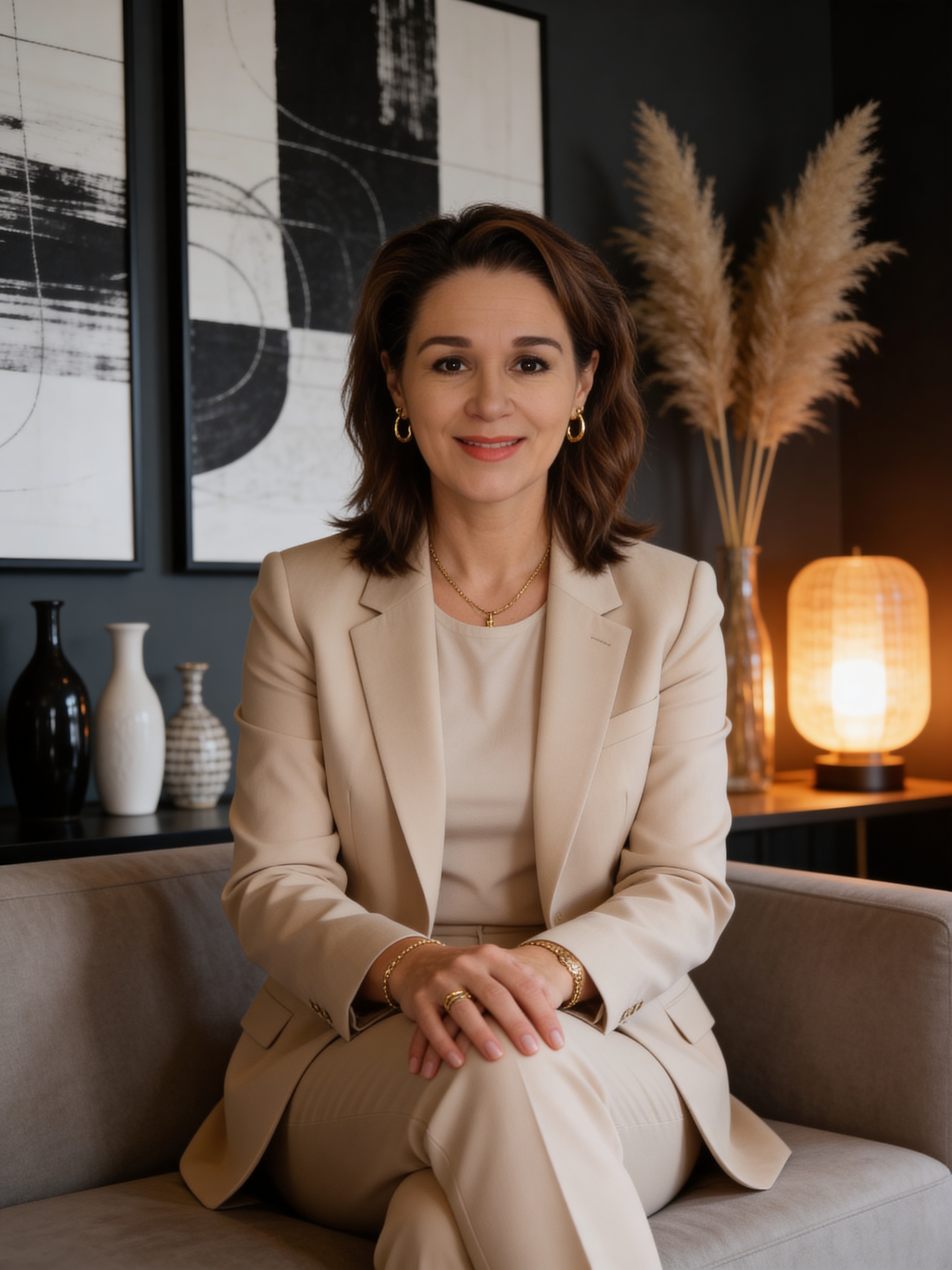
I am P. Dale Henson, the founder and chief executive officer of Personal Care Calling Services, Inc., doing business as Daily Peace of Mind Communications, and I am the software architect of the DPOM CARE Communications Platform.
Who Notices When No One Else Is Watching?
There is a question most people do not want to ask themselves:
If something happened to me today, how long would it take before someone noticed?
That question helped lead me to establish Personal Care Calling Services, Inc. in March of 2014. As of 2026, the organization also does business as Daily Peace of Mind Communications.

For more than twelve and a half years, I have worked with older adults, senior veterans, and adults with disabilities who may live alone, have limited support, or have no dependable person checking on them consistently. Some are lonely. Some are not. Some are surrounded by people and still have no one truly paying attention.
That distinction matters.
Being alone is not the same as being lonely. A person can be independent, mentally strong, emotionally healthy, busy, and completely content with their own company. I understand that personally. I am a woman approaching a different stage of life. I do not have children, a husband, or a live-in companion. I am healthy, emotionally well, and deeply engaged in my mission, and not sitting around feeling lonely.
But I also understand the practical question more clearly now than I did when I began this organization:
Who is responsible for noticing if the normal pattern of my life suddenly stops?
That is not a question about weakness. It is a question about safety.
Social Isolation Is Not Always Visible
The National Academies of Sciences, Engineering, and Medicine has reported that nearly one-quarter of community-dwelling Americans age 65 and older are socially isolated. The Centers for Disease Control and Prevention makes an equally important distinction: social isolation is an objective lack of relationships, contact, or support, while loneliness is the personal feeling of being disconnected.
Someone can experience either one, both, or neither.
Recent research involving more than 10,000 community-dwelling older adults identified several very different patterns of social connection. One group was married yet socially disconnected. The finding reinforces something PCCS has observed for years: a marriage, a shared address, or a list of relatives does not automatically mean a person has dependable support.
“We make a serious mistake when we assess vulnerability by appearances.”
Living alone does not mean incapable. Being married does not guarantee protection. Having adult children does not mean those children are nearby, attentive, available, or involved. What I have sadly realized is that some adult children abandon an ailing or chronically ill senior parent. That estrangement can become as persistent as a disease.
Receiving medical care does not mean anyone notices what happens during the long hours between appointments.
Paperwork can show an emergency contact. Life can reveal that the person is not truly available. My very first recipient, Grant, nearly died in his basement in Denver, Colorado, in 2019 because his three neighbors were away for Christmas, visiting family or friends. He was found at the bottom of his basement stairs with a compound femur fracture. The bone was protruding through the skin of his thigh, and he was bleeding. He had also suffered a major concussion. He did not die there while the temperature outside stood at three degrees below zero amid snowy conditions.
The Personal Care Calling Services escalation protocol saved him. Three weeks later, Grant called me from a rehabilitation center. I began apologizing for not reaching him sooner. He stopped me and said, “Your service works. You saved my life.” What he said to me changed my life and the organization’s vision and mission forever. PCCS moved forward, strengthened its protocols, created a second program, and ultimately built and launched our proprietary mass communications platform, which is now operational.
What Reassurance Communications Really Mean
At Personal Care Calling Services, we use the term reassurance communications because it describes the totality of the service.
A reassurance communication may be a scheduled care call, a medication reminder, a text message, an email, or another personalized check-in. The communication itself matters, but the responsibility behind it matters even more.
Was the communication received?
Did the recipient respond in a way that PCCS knew they were okay for that day?
Did something sound wrong?
Was a medication reminder acknowledged?
Did a person who normally answers suddenly remain silent?
PCCS does not prescribe medication, administer medication, or guarantee adherence. A reminder is exactly that, a reminder. But a properly structured service can document whether the reminder was delivered, recognize a missed or concerning response, and begin the appropriate follow-up.
That is the difference between sending a message and operating a reassurance communications system. The purpose is not merely to make contact; it is to help reduce isolation, ease fear and anxiety, and provide the reassurance that someone is paying attention. It cannot remove every hardship, but it can make the darkness feel less dark, allow some light to enter, and create a path toward hope through dependable communication, advocacy, and individualized support.
The Care Circle Must Be More Than a Name on a Form
Every recipient should have a dependable Care Circle. That circle may include relatives, friends, neighbors, caregivers, an agency, or another trusted person authorized to respond when concern arises.
But many people do not have that circle.
For many PCCS recipients, our organization is the only dependable entity consistently checking in. This is not a slogan. It is an enormous responsibility.
We become a Care Circle of one for most of our precious recipients.
When a recipient does not respond to scheduled outreach, PCCS follows an established escalation protocol. The circumstances determine the next step. The Care Circle may be contacted. Additional outreach may be attempted. If concern remains and the circumstances justify it, PCCS will request an in-person wellness check from the appropriate local law enforcement agency serving the recipient’s location.
PCCS does not perform those in-person wellness checks, and we do not replace emergency services, medical care, home care, or personal responsibility. We provide a structured point of contact that can recognize silence and act on it.
Sometimes silence means someone was away from the telephone.
Sometimes it means the telephone was not charged.
Sometimes it means something is wrong.
The purpose of an escalation protocol is not to assume the worst. It is to make sure nobody simply ignores the possibility.
Why We Built the DPOM CARE Communications Platform
After more than twelve years of doing this work, I knew PCCS needed technology built around the realities of the mission.
The DPOM CARE Communications Platform is a mass communications platform for calls, texts, and emails. It includes a recipient database, and an escalation engine designed around documented protocols. The technology is intended to support scheduled communications, recipient preferences, Care Circle information, missed responses, follow-up actions, and detailed records.
It was not created because technology can replace human concern. It was created because concern without consistency can still fail people.
Technology can deliver scheduled communication. It can log a response. It can identify that an expected response did not arrive. It can notify the appropriate people and preserve an accountable record of what happened.
But technology does not carry the moral responsibility. People do. We do.
Recent national research found that 57.7 percent of Area Agencies on Aging surveyed offered visiting or calling programs. That finding shows that structured personal contact is already part of the aging services landscape, not a fringe idea. The challenge is making these services consistent, accessible, scalable, and accountable, including in rural and underserved communities where staffing and infrastructure are often limited.
Aging in Place Cannot Mean Being Left in Place
We speak proudly about aging in place, but we often leave out the infrastructure required to make it safe.
Aging in place is not simply remaining inside one's home. It requires access to food, medication, transportation, health care, safe housing, communication, and people who will respond when help is needed.
Our country has resources. What we too often lack is the collective will to place dignity ahead of convenience and human need ahead of bureaucracy.
I am disturbed by the way older adults, veterans, and people with disabilities are expected to survive on inadequate incomes while navigating systems that are fragmented, confusing, understaffed, and often indifferent. Low income must never be treated as low worth.
“Needing assistance must never erase a person's dignity.”
I am not neutral about this. I am defiant about it.
No one should become invisible because they grew older, became disabled, lost a spouse, outlived family members, or could no longer afford the level of help they needed. No one should have to earn the right to be treated as though their life still matters.
Government agencies, health plans, hospitals, aging-service organizations, veteran-serving organizations, municipalities, nonprofits, families, and technology providers all have a role. This cannot continue to be treated solely as a private family problem, especially when far too many people do not have an available family member to carry that responsibility.
The Question Is Simple
Who notices?
Who notices when the medication reminder receives no response?
Who notices when the person who always answers suddenly does not?
Who notices when there is no daughter, son, spouse, neighbor, or caregiver nearby?
Who is willing to act instead of assuming somebody else will?
Personal Care Calling Services was created to help answer those questions. The DPOM CARE Communications Platform was built to help us answer them consistently, document the response, and extend that ability to other organizations that carry the same responsibility.
A call alone cannot solve social isolation. A text cannot repair an inadequate care system. A medication reminder cannot guarantee that medication is taken. Technology cannot manufacture love or replace a trustworthy human relationship.
But a well-designed reassurance communication can create a moment of connection. It can support a routine. It can identify a break in an established pattern. It can begin an escalation. It can make certain that silence is not automatically overlooked.
Sometimes that is reassurance.
Sometimes that is advocacy.
Sometimes that is the first step toward help.
And sometimes, it can be the reason someone is found in time.
Because everyone matters, and a reasonable quality of life is a right, not a luxury.
I am P. Dale Henson, the founder and chief executive officer of Personal Care Calling Services, Inc., doing business as Daily Peace of Mind Communications, and I am the software architect of the DPOM CARE Communications Platform.
Learn more at www.PCCS.care.
Selected Sources
1. Social Isolation and Loneliness in Older Adults: Opportunities for the Health Care System, National Academies of Sciences, Engineering, and Medicine, 2020.
2. Health Effects of Social Isolation and Loneliness, Centers for Disease Control and Prevention.
3. Identification and characteristics of social connection latent profiles in older adults, BMC Geriatrics, October 7, 2026.
4. Social Engagement Programs of Area Agencies on Aging, Journal of Applied Gerontology, October 11, 2026.


Comments